Your Supply Chain's Shadow Brand: Why Your Refurbisher is Your New PR Director
In 2025, your refurbishing partner is your shadow brand. Discover why this vendor choice is a critical PR, ESG, and reputational decision for the C-suite. Learn the framework to turn risk into reward.

Picture this: It’s 2025. A major tech brand is celebrating its new "Climate Neutral" certification when an investigative report drops. The headline is brutal: "Tech Giant's 'Green' Promise Tarnished by Its Own Refurbisher's E-Waste Dumping."
In a flash, the narrative implodes. The company’s glossy sustainability report becomes a punchline, and the actions of a little-known, third-party partner now define its public identity.
This isn't a simple supply chain hiccup. It’s a full-blown brand crisis.
Welcome to the era of the Shadow Brand—the collective identity formed by your partners, whose actions are instantly and permanently seen as your actions. And in this new reality, your choice of a refurbishing partner is no longer just about cost savings. You are, in effect, appointing a key player in your public relations, risk management, and brand stewardship.
The 2025 Landscape: Your Refurbisher is on the Front Line
The rules of reputation have been rewritten. For C-suite leaders, three seismic shifts have moved the refurbisher from a back-office function to a boardroom priority.
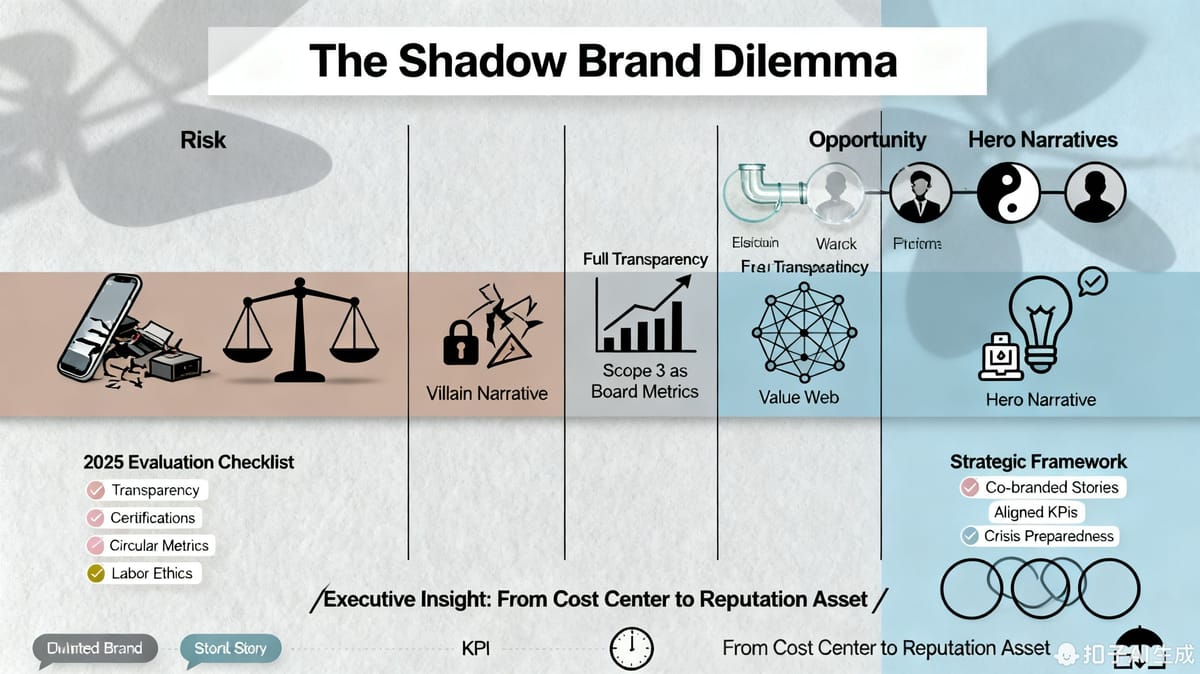
1. Radical Transparency is the Default: Consumers and investors can now trace a product's entire lifecycle with a few clicks. Your brand is only as strong as its weakest—or least ethical—link. There are no more secrets, only stories waiting to be told.
2. Scope 3 is a Boardroom Metric: Your refurbisher's operations—their energy use, waste disposal, and material sourcing—are a direct line item on your Scope 3 emissions. This is no longer a footnote in an ESG report; it's a critical metric that investors watch closely, directly impacting your market valuation.
3. From Value Chain to Values Chain: Procurement is now a values-driven function. The rise of the Chief Impact Officer signals a new mandate: every partner must be a genuine extension of your company’s ethical and environmental promises.
The High-Stakes PR Playbook: Your Refurbisher as Hero or Villain
Your refurbishing partner is a central character in your brand’s story. Which role will they play?
The Villain Narrative (The Existential Risk)
- The E-Waste Exposé: As in our opening scene, poor recycling practices can vaporize millions in marketing spend overnight, triggering a devastating environmental scandal.* The Labor Rights Crisis: Unethical labor conditions at a refurbishment facility can spark a human rights backlash, alienating customers, investors, and the very talent you're trying to attract.* The Data Breach: Insecure data sanitization processes can lead to a massive privacy breach, with all the legal and reputational fallout landing squarely on your doorstep.
The Hero Narrative (The Transformative Opportunity)
- The Circular Economy Champion: A transparent, ethical refurbisher is living proof of your commitment to a circular model—a powerful, authentic story you can actually stand behind.* The Affordable Access Story: Framing refurbished goods as a key to digital inclusion and sustainability builds genuine brand affinity and opens up new markets.* The Innovation Partner: Showcasing how a high-quality refurbisher extends product lifecycles and reduces raw material consumption positions your brand as a true leader.
Vetting Your "PR Director": The 2025 Refurbisher Checklist
Choosing a refurbisher can no longer be about the lowest cost-per-unit. You need to vet them as if you were hiring your Head of Communications.
- Demand Radical Transparency: Do they offer live data dashboards and open-door policies for their facilities? If you can’t see their operations, you don't control the story.
- See Certifications as the Floor, Not the Ceiling: NIST 800-88 for data destruction; R2v3 or e-Stewards for electronics recycling. In 2025, these are non-negotiable table stakes.
- Ask for Circularity Metrics: Can they provide concrete, auditable data on landfill diversion, component recovery, and carbon footprint reduction? Vague promises don't cut it anymore.
- Get a Labor & Ethics Pledge: Demand evidence of fair wages, safe working conditions, and a code of conduct you'd be proud to publish on your own website.
Integrating Your Shadow Brand: A Strategic Framework
Managing this risk is just the start. The real win is to integrate and elevate your refurbisher.
- Co-Brand the Circular Story: Don’t hide your refurbisher; feature them. Include their processes and standards in your sustainability reports and marketing campaigns. Make them a character in your hero's journey.
- Align on Shared Metrics & KPIs: Structure contracts and incentives not just on cost, but on brand-positive outcomes. Tie their success to improvements in your public ESG score or positive media coverage.
- Prepare for a Crisis, Together: Your refurbisher must be part of your crisis simulation drills. A unified, pre-tested response plan isn't optional; it's your essential armor.
The C-Suite Takeaway: From Cost Center to Reputation Asset
The bottom line for modern leaders is clear:
- Follow the (Real) Money: The cost of a single PR crisis or stock devaluation dwarfs the marginal savings from a cut-rate, non-compliant refurbisher.
- Remember Your People: Top talent in 2025 wants to work for companies with integrity. A strong, transparent supply chain is a powerful recruitment and retention tool.
- Your Next Move: It’s time to schedule a meeting that includes your Head of Procurement, your Chief Marketing Officer, and your Head of Sustainability. Put this question on the table: "Who is our Shadow Brand, and what story are they telling the world about us?"
Step Out of the Shadows
The paradigm has shifted. Your refurbisher is an extension of your brand, for better or worse. In 2025, the most resilient and valuable brands won't just have a supply chain; they will have an integrated, values-aligned ecosystem.
In this ecosystem, every partner—especially the one handling your products' second life—is a guardian of your public reputation.
Choose them like your brand depends on it. Because it does.