The 2026 Carbon-Neutral Blueprint: Measure and Offset Your Refurbished Phone Fleet

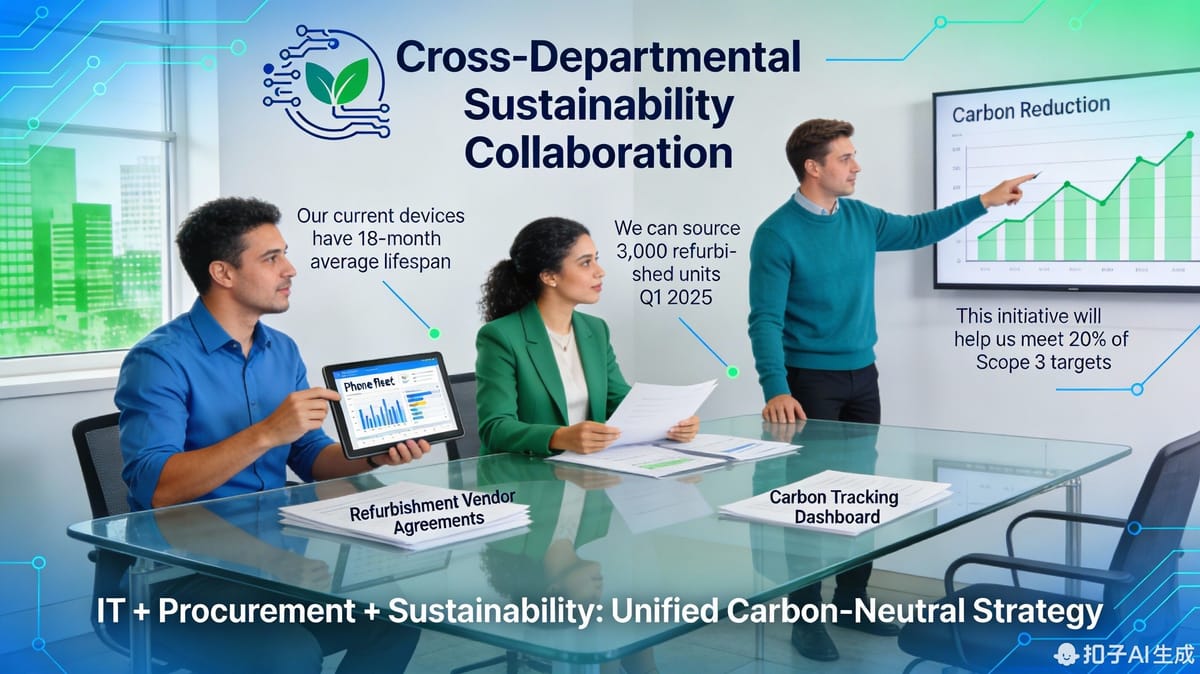
For IT Directors, Sustainability Leaders, and Procurement Officers
If you manage a corporate device fleet, 2026 is more than just a date. It’s a carbon accounting deadline. With regulations like the EU’s Corporate Sustainability Reporting Directive (CSRD) in full effect, vague sustainability promises won’t cut it. Your carbon footprint—especially from Scope 3 emissions like IT hardware—will need to be measured, reported, and managed.
Choosing refurbished phones is a strong first step, showing real commitment to the circular economy. But it isn’t, by itself, a carbon-neutral claim. True leadership means having a concrete plan to measure, reduce, and offset your fleet’s footprint.
This guide is your actionable blueprint. We’ll walk you through how to turn your refurbished phone fleet from a sustainability talking point into a verifiable, carbon-neutral asset by 2026—transforming compliance into a clear competitive advantage.
Section 1: Why 2026 Matters – Beyond Checking Boxes
The clock is ticking for good reason. By 2026, detailed carbon reporting won’t be optional—it’ll be essential. This isn’t about paperwork; it’s about future-proofing your business.
- The Regulatory Push: Rules like the CSRD and emerging SEC climate disclosures will require you to report Scope 3 emissions—the indirect footprint of your value chain, including IT hardware. Your refurbished phone strategy will be in the spotlight.
- The Business Pull: Beyond compliance, a carbon-neutral fleet builds brand trust, meets client sustainability criteria, attracts talent, and shields you from future carbon costs.
- Your Refurbished Advantage: A managed refurbished fleet is the foundation of a credible circular story. It shows tangible action, making your eventual carbon-neutral claim authentic and defensible.
Section 2: Mapping Your Fleet’s Carbon Lifecycle
To manage your footprint, you need to see the full picture. For a refurbished phone, emissions occur across its extended life:
1. Embodied Carbon (The Biggest Piece): This is the CO₂ from the device’s original manufacture—mining, processing, assembly. With refurbished models, that impact is shared across multiple users, slashing the per-person footprint.
2. Refurbishment Operations: Energy, parts, and packaging used to restore the device.
3. Use-Phase: Electricity from charging during daily use.
4. Logistics & End-of-Life: Transport to and from your business, plus responsible recycling.
The Guiding Principle: Measure Accurately, Reduce Aggressively, Offset Responsibly. Offsets come last—not first.
Section 3: Measurement – Finding Your Starting Line
You can’t manage what you don’t measure. Here’s how to set your 2026 baseline.
- Step 1: Gather Your Data. You’ll need:
- The number and models of devices in your fleet.
- Primary data from your refurbishment partner on their process emissions (this is key—don’t settle for averages).
- Estimated annual usage per device.
- Logistics details for distribution and collection.
- Step 2: Apply a Trusted Methodology. Use Life Cycle Assessment (LCA) principles. Look for carbon calculation tools built for IT assets, or work with a sustainability consultant. Demand primary data from your refurbisher for credible reporting.
- Step 3: Establish Your Benchmark. Bring this data together into a total tonnes of CO₂ equivalent (tCO₂e) for your fleet. This is your starting line.
Section 4: Reduction – Shrinking What You Can
Before buying offsets, shrink what you need to offset.
- Collaborate with Your Refurbishment Partner: Ask the right questions: Do they use renewable energy? How are parts sourced? What’s their repair-versus-replace rate? Partner with providers who prioritize low-carbon operations.
- Optimize Fleet Management: Extend device life with protective cases and user care guides. Switch to a renewable energy tariff for your offices to green the use-phase. Streamline logistics.
- Set Science-Based Targets: Define clear, incremental reduction goals for your fleet leading up to 2026 and beyond.
Section 5: Offsetting – Neutralizing the Rest
For emissions you can’t yet eliminate, high-quality carbon offsets are the answer.
- Focus on Quality: Credits must be verified (by standards like Verra or Gold Standard), additional (the project wouldn’t exist without offset funding), and permanent.
- Choose Projects That Fit: Support initiatives that align with your tech focus: renewable energy, certified e-waste recycling abroad, or forestry conservation.
- Get Certified (For Maximum Impact): For a robust claim, consider formal carbon-neutral certification for your fleet from a recognized body. It adds third-party assurance and serious credibility.
Section 6: Your 2026 Action Plan & Sharing the Win
A 24-Month Roadmap (Start Now):
- Months 1-3: Internal alignment & data collection kickoff.
- Months 4-6: Complete footprint assessment & set your baseline.
- Months 7-12: Implement reduction strategies with your refurbishment partner.
- Year 2, Months 1-6: Procure high-quality offsets and begin certification.
- Year 2, Months 7-12: Achieve certification, integrate into 2026 reporting, and launch communications.
Tell Your Story: Use this achievement in ESG reports, marketing, and internal updates. Show stakeholders the concrete action behind your promise. Treat 2026 not as a finish line, but as a launchpad.
Conclusion: From Cost Center to Climate Leader
The path is clear: Measure, Reduce, Offset. By starting now, you turn a compliance exercise into a demonstrated competitive edge.
You’ll future-proof your operations, solidify your brand as a leader, and prove that sustainable business is simply smart business. Your refurbished phone fleet becomes more than an IT asset—it’s a beacon of your responsibility.
Your Next Step: Review your current refurbishment partner’s carbon data practices. Start the conversation with your sustainability and leadership teams. Use this blueprint to navigate to 2026 with confidence.