Right to Repair 2026: How New Laws Are Unlocking a Goldmine for B2B Refurbished Tech

Picture your company’s IT asset graveyard: stacks of laptops with just one failed port, decommissioned servers because of a single proprietary part, and a steady stream of e-waste from devices declared “unrepairable” by design. For years, B2B leaders have faced the same frustrating cycle—soaring costs, unexpected downtime, and missed sustainability goals.
But a pivotal shift is coming. By 2026, Right to Repair laws from California to the European Union will mature from promising proposals into enforceable mandates. This isn't just about fixing smartphones at home. For businesses, it’s the key that will unlock a scalable, reliable, and deeply profitable refurbished tech market.
This article connects the dots between these new regulations and tangible opportunities, showing how Right to Repair 2026 is poised to turn B2B refurbished tech from a niche alternative into a core pillar of enterprise IT strategy.
The Legal Shift: From Concept to Competitive Advantage
What makes laws like those in California and New York so transformative is their expanded scope. They’re moving beyond consumer gadgets to cover enterprise-critical gear—business laptops, servers, networking equipment, and point-of-sale systems. Suddenly, regulation is speaking directly to corporate IT.
These laws mandate three essential forms of access that break down traditional repair barriers:
1. Parts & Diagnostics: Manufacturers must ensure genuine components are available, creating a legal supply chain outside OEM-controlled channels.
2. Tools & Software: Independent technicians get access to the specialized tools, diagnostic software, and firmware updates needed for complex repairs.
3. Documentation: Publicly available repair manuals, schematics, and guides—essentially, the blueprints for successful repair.
Why 2026 matters: Compliance timelines mean that by this date, a mature, competitive ecosystem of non-OEM parts suppliers and service providers will be fully operational. The law sets the stage; the emerging supply chain is where the real value lies.
The Goldmine Unlocked: Three Direct Wins for B2B Refurbishers
For refurbishers and resellers, the shift is from scarcity to scale.
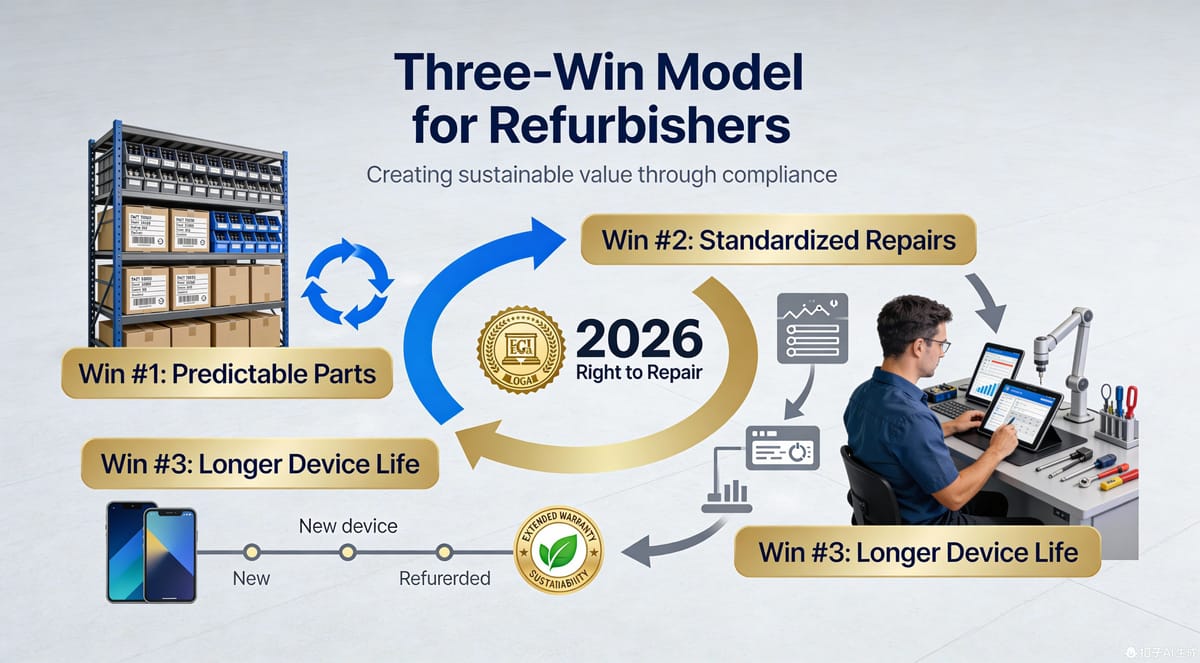
- Win #1: Predictable, Affordable Parts. The days of hunting for “donor devices” are numbered. Refurbishers can now build strategic inventories sourced from certified suppliers. Costs for high-failure parts like screens, batteries, and logic boards will fall—boosting margins and making planning far more reliable.
- Win #2: Faster, Standardized Repairs. Universal repair manuals and accessible tools mean faster technician training and streamlined workflows. Repair throughput will jump, driving down per-unit costs and improving turnaround for B2B clients who can’t afford long waits.
- Win #3: Longer, More Valuable Device Life. The ability to perform advanced board-level repair changes everything. Extending the usable life of enterprise hardware boosts the resale value and appeal of certified refurbished units. It also makes circular models like lease-back and tech refresh programs far more compelling.
The Ripple Effect: How B2B Buyers and the Entire Ecosystem Benefit
This opportunity doesn’t exist in isolation. The whole enterprise ITAD and procurement landscape stands to gain.
For Enterprise Buyers (IT, Procurement, CFOs):
- Lower Total Cost of Ownership: High-quality, warrantied refurbished options become more reliable and accessible for entire fleets.
- Stronger Sustainability Story: Achieve real progress on ESG and circular economy goals through verifiable repair, reuse, and e-waste reduction.
- Less Downtime: Multiple repair options mean faster service and reduced operational risk.
For the Broader Market: Expect more stable secondary market prices, growth in specialized B2B independent repair jobs, and fresh innovation in diagnostic tools and repair tech.
Preparing for 2026: Your Playbook for What’s Next
The time to plan is now. Here’s how to position yourself:
- Refurbishers/Resellers: Start building relationships with emerging certified parts suppliers. Invest in advanced board-level repair training. Develop a “Right to Repair-Compliant” quality seal to build B2B trust.
- B2B Procurement & IT Teams: Update RFPs to prioritize device repairability and third-party service support. Model longer refresh cycles (5-6 years) into budgets, factoring in the improved parts availability coming by 2026.
- ITAD Providers: Pivot from recycler to “Circularity Partner.” Showcase enhanced repair and remarketing capabilities powered by new laws, emphasizing asset recovery value and sustainable IT outcomes.
Navigating the New Terrain: Honest Challenges
The path won’t be perfectly smooth.
- OEM Adaptation: How will manufacturers respond? Watch for “authorized independent” programs or new software nuances.
- Quality Assurance: With more parts sources, rigorous testing and certification will be crucial to maintain B2B trust.
- Warranty & Liability: Clear warranty models will need to evolve in a more diverse service landscape, making transparency more important than ever.
Conclusion: The Future is Repairable—and Profitable
Right to Repair 2026 marks the moment a legal principle becomes an operational reality. It empowers the B2B refurbished tech sector to grow into a stable, innovative, and primary component of enterprise IT.
This is more than compliance—it’s a strategic reset. The move is clear: audit your IT supply chain, talk to your refurbishment partners about their 2026 roadmap, and rethink your device lifecycle planning. The goldmine is opening. Now’s the time to build the tools to harness its full value.