Less is More" IT Manifesto: Why 3 Phone Models Beat an Endless Fleet
Drowning in a sea of different phones? Discover why standardizing on just 3 models can slash IT chaos, boost security, and free your team to do their best work. Your roadmap to a smarter, simpler device strategy is here.

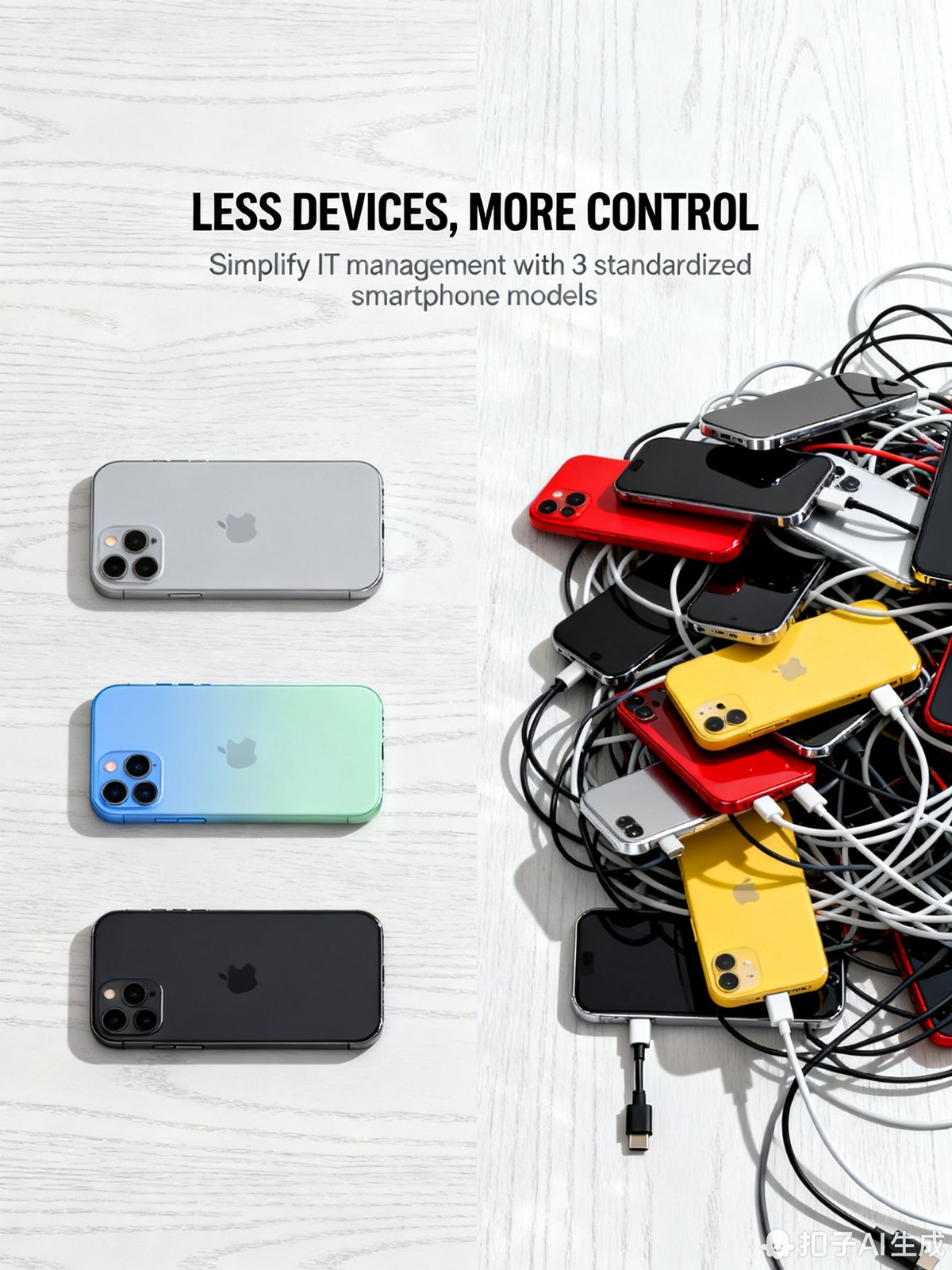
How many hours did your IT team lose last month trying to fix the same email issue across a dozen different phone models?
If that question makes you sigh, you're not alone. For years, corporate IT has been held hostage by the myth of choice. We thought offering an endless list of devices meant flexibility. In reality, it just created a mess of complexity, frustration, and hidden costs that never seem to end.
It’s time for a change. This isn't just a suggestion; it's a new way of thinking. Welcome to The "Less is More" IT Manifesto.
We’re going to show you how choosing just three core phone models isn't a limitation—it’s a powerful strategy to cut costs, strengthen security, and, most importantly, give your IT team the freedom to focus on what really matters.
The Real Price of "Choice": Your Hidden Chaos Tax
That "flexible" fleet of devices is quietly eating up your resources. We call this the Chaos Tax, and you're paying for it in a few key ways:
- The Support Black Hole: Every unique model needs its own troubleshooting guide. Your techs have to be experts on everything, which means they're masters of nothing. The result? Longer fix times and grumpy employees.
- The Procurement Puzzle: Juggling multiple vendors, a tangle of contracts, and missing out on volume discounts is a surefire way to watch your budget bleed.
- The Closet of Misfit Tech: Your storage room has become a graveyard for outdated chargers, incompatible cases, and spare parts for phones you forgot you even owned.
- The On/Offboarding Headache: Setting up a new hire shouldn't be a new project every single time. And when someone leaves, trying to securely wipe and recover a device is far riskier when every process is different.
The Magic Number: A Smarter Way to Build Your Phone Portfolio
How can just three phones possibly work for everyone? It’s all about smart segmentation, not random picking. Think of it as a "Good, Better, Best" framework:
1. The Essentials (Good): This is your workhorse. It's cost-effective, tough, and reliable—perfect for frontline staff, warehouse teams, or anyone who just needs solid communication and basic app access. It’s about getting the job done, not having the flashiest specs.
2. The Performance Pick (Better): This is your standard-issue device for knowledge workers. Think last year's flagship model: powerful, balanced, and perfect for your teams in sales, marketing, and engineering. It handles all your core business apps without a hitch.
3. The Power User (Best): Reserved for execs and specialized roles, this is your top-tier device. It has the best security features, processing power, and camera for those high-stakes presentations.
This model isn't about saying "no." It's about giving everyone the right tool for their job, while clearing out the clutter of a hundred wrong ones.
Your Reward for Simplifying: The 5 Big Wins
When you stop trying to support every phone under the sun, you start seeing real returns. We call this the Simplicity Dividend:
1. Your IT Team Gets Time Back: Imagine your team becoming true experts on just three devices. Troubleshooting is lightning-fast, training is a breeze, and your talented IT pros can finally tackle those strategic projects they never had time for.
2. Security Gets a Major Boost: Rolling out a critical security patch? With a standardized fleet, it's one swift action, not a week-long scramble. Your entire company's security becomes consistent, strong, and easy to manage.
3. Your Budget Breathes a Sigh of Relief: Bulk buying power, simpler logistics, and a tiny spare-parts inventory all add up to significant savings. Your CFO will be your new best friend.
4. Everyone Has a Better Experience: Onboarding is now a smooth, repeatable process. Training materials actually make sense. People get a reliable, familiar device, which means less frustration and more getting things done.
5. You Gain Real Agility: Integrating with your device management system is simple. Planning upgrade cycles is straightforward. Plus, a uniform fleet is far easier to refurbish and recycle, making your sustainability (ESG) goals much easier to hit.
But Wait, What About...? Tackling the Tough Questions
We know shifting the culture is the hardest part. So let's tackle those objections head-on.
- Objection: "But people want the newest phone!"
- Our Take: It's about the experience, not the hype. A fully supported, high-performing "Better" tier phone offers a smoother daily experience than a buggy, unsupported "latest model." Reliable performance beats bragging rights every time.
- Objection: "Different teams have different needs."
- Our Take: That's exactly what the three-tier model is for. We match the capability to the job—a great camera for marketing, ruggedness for logistics—not the brand. The framework is your solution to this problem.
- Objection: "Aren't we losing flexibility?"
- Our Take: Let's redefine flexibility. True agility is being able to deploy, secure, and manage devices quickly. A standardized fleet lets you adapt at the speed of business, which is the only kind of flexibility that really counts.
Your Game Plan: How to Make "Less is More" Your Reality
Ready to trade your endless fleet for a little peace of mind? Here’s your roadmap:
1. Take Stock: Do a quick audit of your current phones. You'll probably find that 2-3 models are already doing most of the work. This is your foundation.
2. Define Your Tiers: Work with department heads to map job roles to "Good, Better, Best." Focus on what people actually need to do their jobs, not what they want.
3. Roll Out in Waves: Plan a 12-18 month transition. Sync new device deployments with your natural refresh cycles to keep costs low and avoid overwhelming everyone.
4. Explain the "Why": Don't just announce a new policy. Frame this as an upgrade for the whole company. Talk about better support, stronger security for everyone, and freeing up IT to build cool new things.
5. Find the Right Partner: Consider working with a provider that specializes in high-quality refurbished models for your chosen phones. It’s a win for your budget, for the planet, and for your supply chain.
Conclusion: Give Your Team a Better Future
The goal here isn't to restrict choice, but to eliminate chaos. A simple, standardized device fleet isn't just an IT policy—it's a strategic advantage.
The most precious resource in IT today isn't processing power; it's focused attention. By ending the "endless fleet," you're not just simplifying your phone list. You're giving your team back their time and talent so they can help drive the business forward.
And that’s the ultimate power of 'Less is More.'
Ready to See the Difference?
- Schedule a Chat with Our Strategy Experts - Let's figure out your perfect 3-model lineup and build a rollout plan that actually works.