Ending Fast Tech: A Consumer Guide to Circular Tech and the Environment
Every device kept in circulation is one fewer device manufactured. GiggleFone explains carbon footprint, e-waste, grading, and practical circular choices for Hong Kong shoppers.

Ending Fast Tech: A Consumer Guide to Circular Tech and the Environment
Every flagship launch tells you last year’s phone is “outdated.” For most people, the device still calls, browses, pays, and shoots video — function did not fail; the replacement cycle did.
That is fast tech: marketing cadence driving upgrades faster than real need. Working hardware ends up in drawers, warehouses, or landfill too early.
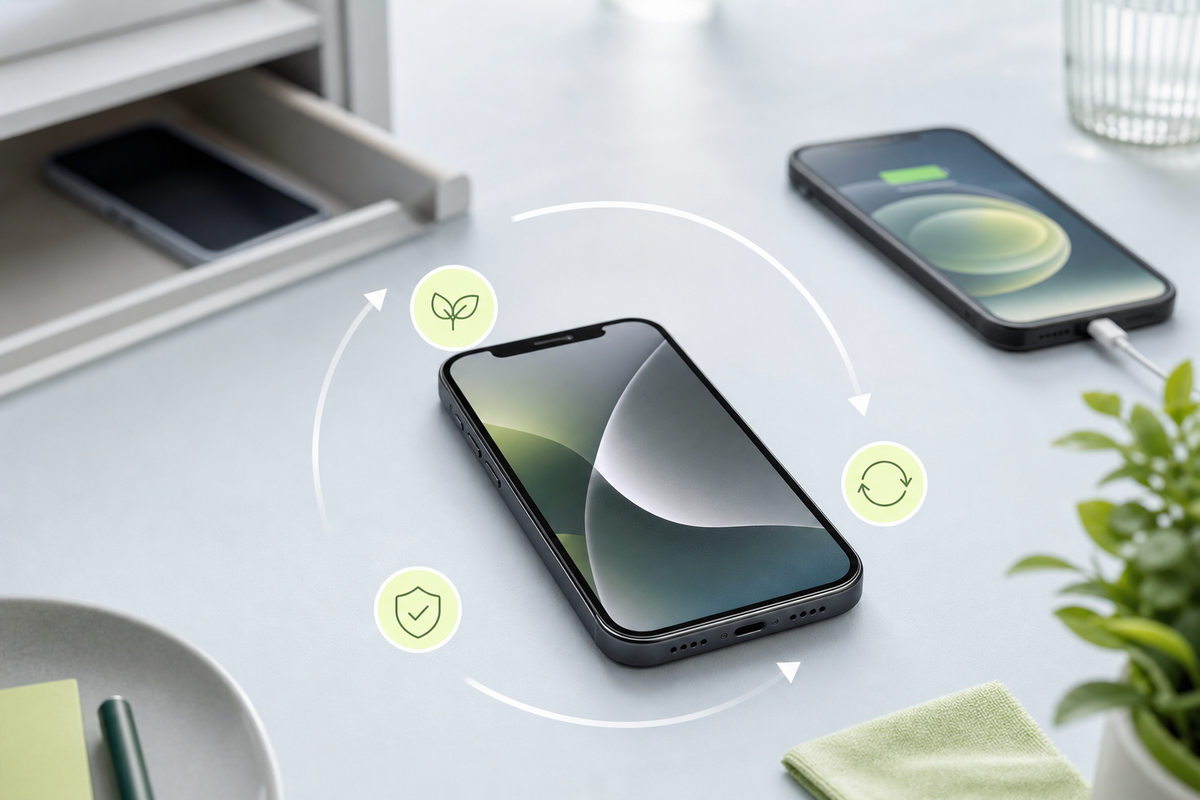
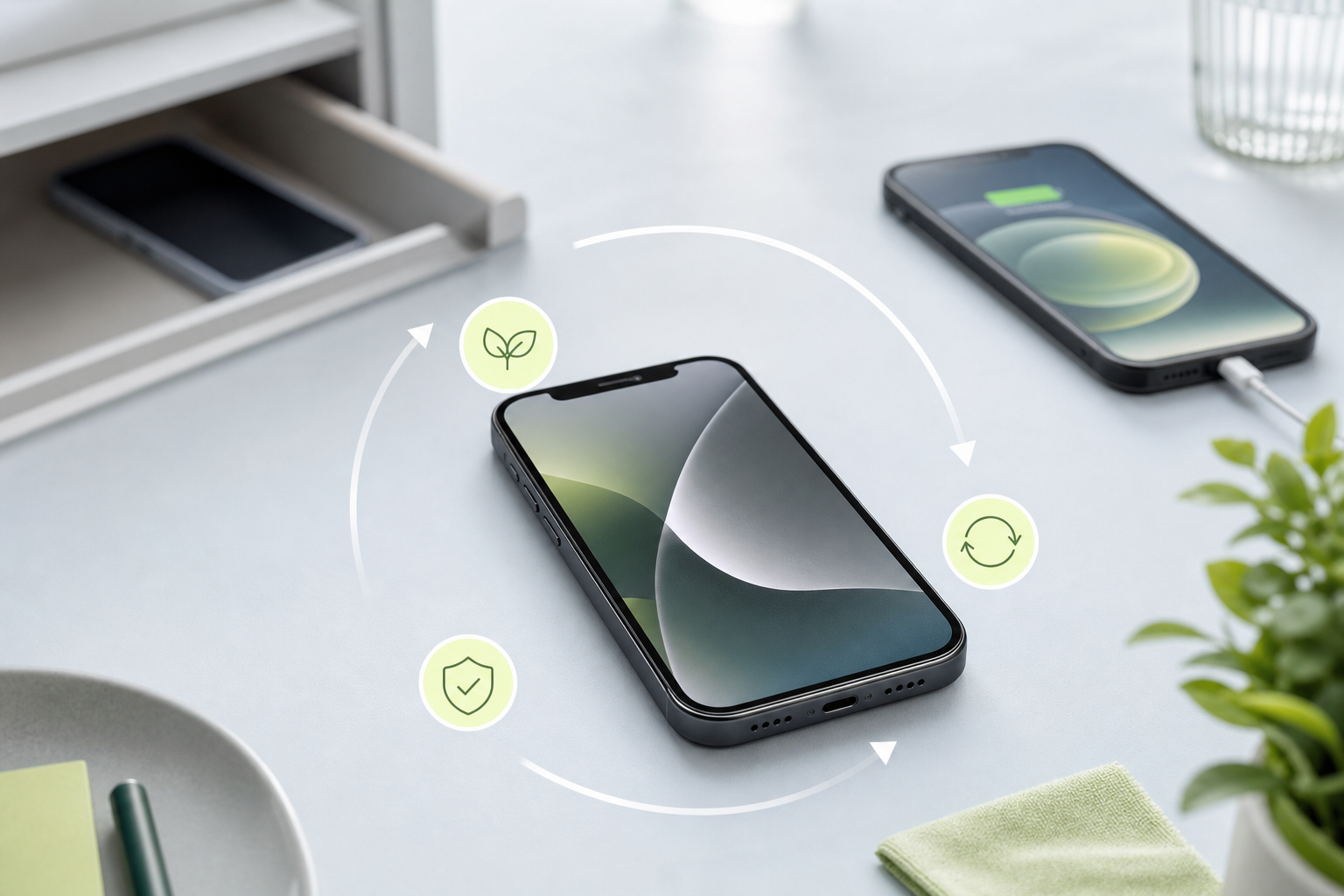
Circular tech flips the script: tested, graded, honestly priced devices stay in use for the next owner. For consumers, that is not a guilt trip — it is smarter shopping: less of manufacturing’s hidden bill, more years of usable value.
The hidden cost of making a new phone
Manufacturing a smartphone is not clean.
Lifecycle studies agree: most lifetime carbon is locked in before the box leaves the factory — mining (lithium, cobalt, tantalum, rare earths), fabrication, and global shipping dominate emissions.
Apple’s reports put a flagship iPhone at roughly 65 kg CO₂ over its life, with more than 80% in manufacturing — paid before you unbox.
So extending a device that already exists is among the most effective environmental actions a buyer can take.
Every graded unit that reaches a second owner displaces demand for a new one. That is lifecycle arithmetic, not a slogan.
E-waste is here now
Global e-waste exceeded 62 million metric tonnes in 2023, up more than 80% in a decade. Less than a quarter is formally recycled; the rest goes to landfill or informal processing.
Phones are a major slice: small, easy to discard, hard to repair at scale without infrastructure. When upgrade cycles compress for marketing, waste outruns recycling capacity.
Hong Kong generates significant e-waste per capita. Many phones retire while still functional. Circular tech targets the gap: still works, already thrown away.
What circular tech means for you
For shoppers, circular tech is a repeatable set of choices:
- Use longer — don’t upgrade while the current phone still meets your needs.
- Pass devices on — when you do upgrade, route the old unit through proper channels.
- Buy existing inventory — choose tested, graded stock instead of assuming “new only.”
- Read condition clearly — use A+ / A / B / C, not vague “90% new” language.
GiggleFone Renewal bundles those paths: product catalog and device stock under one grading standard.
Every device kept in use is one device not made
| Choice | Footprint (estimate) | Notes |
|---|---|---|
| Brand-new flagship | ~65 kg CO₂ | Manufacturing dominates |
| Graded device in continued use | ~15–30 kg CO₂ | Skips most manufacturing |
| Phone idle in a drawer | Emissions already spent, value lost | Worst of both worlds |
A graded iPhone from GiggleFone often cuts estimated footprint by 50–70% versus buying new — roughly the emissions of 200–300 km of typical car travel (model-dependent; direction is consistent).
Environmental benefit only holds when reuse is reliable and verified — not random second-hand luck.
Why A+ / A / B / C grading matters for the planet
Vague condition words drive returns; each return adds logistics, packaging, and handling — secondary waste.
Shared grades align expectations before payment:
| Grade | Cosmetics (summary) | Function |
|---|---|---|
| A+ | Near mint | Full test pass |
| A | Light wear, visible on close look | Full test pass |
| B | Noticeable light marks | Full test pass |
| C | Obvious wear | Full test pass |
Every GiggleFone unit passes 74 function checks before grading; battery health ≥ 85% (battery claims within 3 months of delivery). See grade standards — aligned with giggletrade.com/grades.
Honest language → fewer returns → less secondary waste. Grades are infrastructure for circular commerce.
How GiggleFone operationalises circular choices
Before shipping, we test, disclose, and recirculate — the goal is clarity, not “looks brand new”:
- 74-point function testing
- Battery verification and A+ / A / B / C cosmetic grading
- Data wipe and unlock
- 6-month standard warranty (optional extended warranty at checkout for up to 12 months total) and 14-day change-of-mind returns (warranty, returns)
Browse models on product catalog, pick units on device stock, or scan good deals for strong recent pricing.
For the brand narrative behind circular tech, read Circular tech.
Three practical steps for Hong Kong shoppers
1. Ask “is it enough?” before “is it new?”
Delaying upgrade while the current phone works is the lowest-cost environmental win.
2. When you must upgrade, choose verifiable graded stock
Decide on grades and battery data, not discount hype or seller adjectives.
3. Keep old devices moving
Retired phones belong in proper resale or recycling — manufacturing emissions are already sunk; idle storage wastes them.
Closing: two ledgers, one decision
We are not saying you owe the planet a specific purchase. The practical view:
When you extend device life and buy tested graded inventory, you reconcile wallet and environment — ledgers that fast tech usually keeps separate.
Every device kept in circulation is one device not manufactured. That is circular tech for consumers in one line.
Read more: Renewal · Circular tech · Grades · Good deals · Catalog
Originally published on GiggleFone — certified graded iPhones for Hong Kong.