Future-Proofing Loyalty: The 2026 Guide to Emotionally Durable Refurbished Tech

Introduction
By 2026, a perfect storm will reshape the workplace. Skyrocketing tech costs, employee demand for authentic sustainability, and a relentless war for talent will collide. The old playbook—issuing disposable gadgets on a two-year cycle—is now a liability. It drains budgets, contradicts ESG pledges, and fails to inspire the loyalty that keeps your best people.
But what if the most powerful tool for building a resilient organization wasn’t the newest device, but a smarter, more meaningful one? Forward-thinking companies are discovering a key to employee satisfaction and operational agility lies not in chasing specs, but in strategically investing in emotionally durable refurbished technology.
This is about far more than cost-saving. This guide is your playbook for using tech as a lever to boost pride, reduce churn, and build a loyal, engaged workforce ready for 2026 and beyond.
The Loyalty Equation in the 2026 Workplace
Employee loyalty is being rewritten. Today’s professionals seek purpose, stability, and alignment with their personal values. They notice when a company’s sustainability talk doesn’t match its actions. They feel the daily friction of underperforming, flimsy tools.
This is where Emotional Durability comes in. It’s the measure of a device’s ability to remain desirable, satisfying, and relevant over time. It’s not just a tough chassis; it’s a product that fosters pride, minimizes daily frustration, and becomes a reliable partner in an employee’s work life.
This article frames a strategic shift: from viewing refurbished tech as a budget option to leveraging it as a premium, intelligent tool for cultivating loyalty from the inside out.
1. Beyond the Spec Sheet: What "Emotional Durability" Really Means
Emotional durability is the opposite of planned obsolescence. It’s what makes a user want to keep and care for a device.
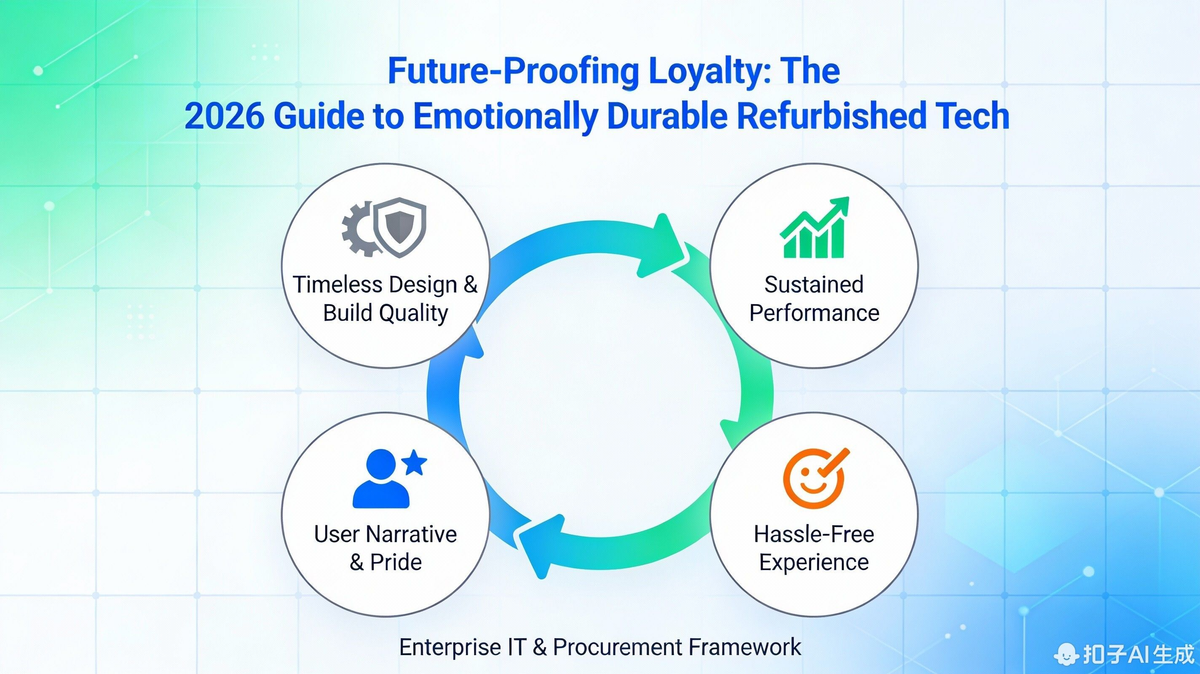
Key Pillars for 2026:
- Timeless Design & Build Quality: Think clean lines, premium materials (like aluminum or magnesium), and a feel that avoids looking dated. It should feel substantial and professional in your hands.
- Sustained Performance: Consistency is king. A brilliant display that stays bright, a keyboard that remains tactile, a battery that reliably lasts a full workday. It’s about dependable excellence where it counts.
- User Narrative & Pride: The device carries a story: “This is a high-quality machine, thoughtfully renewed. My company chose it for its performance and its positive impact.” This narrative builds a sense of shared values and smart, intentional choice.
- Hassle-Free Experience: Emotional durability shatters if support is lacking. It requires a solid warranty, responsive IT, and an ease-of-use that rivals new equipment.
The Refurbished Advantage: A high-grade refurbishment doesn’t diminish emotional durability; it can enhance it. By replacing wear items (batteries, keyboards), rigorously testing performance, and restoring a “like-new” feel, you create a starting point that feels premium and trustworthy.
2. Your 2026 Procurement Checklist: Selecting for Durability
For IT and Procurement teams, here’s how to filter your choices:
- The Legacy Model Rule: Target formerly high-end, business-grade models known for longevity (e.g., Dell Latitude 7400 series, HP EliteBook 800 series, Lenovo ThinkPad X/T series). Their foundational build quality is unmatched.
- Upgradability as a Feature: Prioritize models where RAM and SSD storage can be easily upgraded before issue. This extends useful life and allows for role-specific customization.
- Software Longevity: Verify the device’s guaranteed window for official OS and security updates. Avoid models nearing end-of-support.
- The "Feel" Test (Non-Negotiable): Before bulk purchase, get samples. Evaluate the keyboard, trackpad, display, and hinge. These tactile elements define the daily experience.
- Partner Vetting: Choose refurbishers whose standards certify emotional durability. Demand transparency on:
- Cosmetic grading (seek “A-Grade”)
- Battery health guarantees (minimum 85% of original capacity)
- Rigorous testing and certified data sanitization.
3. From Issue to Integration: A Rollout that Builds Pride
How you introduce this tech is where strategy becomes sentiment.
- Communicate the "Why": Craft a clear internal narrative. This isn’t a cost-cut; it’s a conscious choice for quality and responsibility. Message: “We’ve invested in premium, refurbished tech to reduce our environmental impact without compromising on the excellent tools you deserve.”
- Elevate the Unboxing: Ditch the plain brown box. Use clean, branded packaging. The device should arrive charged, with a simple welcome screen. Create that “first-day” excitement.
- Bundle for Success: Pair the device with quality accessories—a universal USB-C dock, a protective sleeve, a good headset. This signals a complete, considered investment in the employee’s productivity.
- Empower Choice (Where Possible): Offer a curated shortlist of 2-3 durable models. Let employees in different roles (creative, sales, development) choose the tool that best fits their flow.
4. Measuring Real Impact: KPIs for Loyalty and Longevity
Move beyond cost-per-unit. Track the real ROI in loyalty and resilience.
- Employee Sentiment: Use regular pulse surveys with questions specific to tech satisfaction and its impact on daily work.
- Device Longevity: Track the average lifespan before replacement requests. Aim to extend refresh cycles to 3-4 years.
- Support Ticket Trends: Monitor for reductions in tickets about performance, battery life, or hardware failures.
- Retention & Attraction: Correlate tech program feedback with departmental retention rates. Feature your sustainable tech program in employer branding.
- Sustainability Metrics: Quantify and report the tangible impact: e-waste diverted, carbon emissions avoided, raw materials conserved.
5. The 2026 Horizon: What’s Next for Durable Tech
The future makes this strategy even smarter:
- AI-Powered Refurbishment: AI will predict component failure and optimize each device’s performance during renewal.
- Modularity’s Comeback: The growing niche of repairable, upgradeable devices (like Framework laptops) is a natural fit for durable fleets.
- "Product as a Service" Models: Lease refurbished tech with guaranteed upgrades. This blends circular economy benefits with the promise of modern tools.
- Digital Twin Integration: Use anonymized device health data to proactively manage your fleet, predicting maintenance needs before users notice an issue.
Conclusion: Building a Loyal, Resilient Organization
Emotionally durable refurbished tech is a triple-win. It builds employee loyalty through pride, reliability, and shared values. It strengthens the bottom line through significant savings and extended lifecycles. And it delivers authentic, reportable sustainability wins.
The call to action for 2026 is clear: start a pilot. This isn’t just an IT shift; it’s a foundational component of a modern, responsible, and people-first culture. By 2026, this won’t be a forward-thinking strategy—it will be the standard for organizations that know where true loyalty is built.
Sidebar: Your 90-Day Pilot Plan for 2026
Goal: Test the impact of emotionally durable refurbished tech in one controlled environment.
1. Pick Your Pilot Group: Choose a department with high digital engagement and good feedback channels (e.g., Marketing, Project Management).
2. Choose Your Champion Device: Select one proven, business-grade refurbished model (e.g., a recent Intel Evo or Apple M-series MacBook Air/Pro from a certified refurbisher). Ensure it passes the "Feel Test."
3. Measure & Learn:
- Before: Survey the pilot group on current tech satisfaction.
- During: Roll out with strong "Why" messaging and a premium unboxing experience.
- After (90 Days): Survey again. Analyze the group’s support tickets. Calculate initial cost and e-waste savings.
This pilot gives you the data and stories to build a compelling business case for a wider 2026 rollout.