From 5G to 6G Transition: Why Refurbished 5G Flagships Are the Smart Investment for 2026


As we navigate through 2026, the telecommunications landscape is experiencing another pivotal transformation. While industry leaders and research institutions are already laying the groundwork for 6G networks—with preliminary standards expected around 2028 and commercial deployment targeted for 2030—businesses today face a critical decision point. How should organizations approach their mobile device investments during this transitional period?
The answer emerging from forward-thinking procurement strategies points decisively toward refurbished 5G flagship smartphones. This approach offers a unique convergence of cutting-edge performance, substantial cost optimization, and strategic positioning for the future connectivity ecosystem.
The 5G Reality: Mature Networks, Maximum Value
By 2026, 5G networks have transitioned from emerging technology to ubiquitous infrastructure. Major carriers worldwide have achieved near-complete coverage in urban and suburban areas, with 5G Standalone (SA) networks delivering the low latency and high bandwidth originally promised.
Refurbished 5G flagships from premium manufacturers—think iPhone 14/15 series, Samsung Galaxy S22/S23, Google Pixel 7/8—were engineered specifically to maximize 5G capabilities. These devices support millimeter-wave (mmWave) and sub-6GHz frequencies, enabling download speeds exceeding 1 Gbps.
The financial advantage becomes immediately apparent when comparing refurbished flagships to new mid-range alternatives. A refurbished iPhone 14 Pro or Samsung Galaxy S23 Ultra typically costs 40-50% less than their original retail prices, often landing in the $400-600 range.
Flagship Performance vs. Mid-Range Compromise
The performance differential between refurbished flagship devices and new mid-range phones extends far beyond raw processing power. Flagship smartphones integrate premium components that directly impact business productivity and user experience.
Display Technology: Flagship devices feature OLED or LTPO displays with 120Hz adaptive refresh rates, HDR10+ support, and superior color accuracy. These specifications translate to reduced eye strain during extended use and better visibility for data visualization.
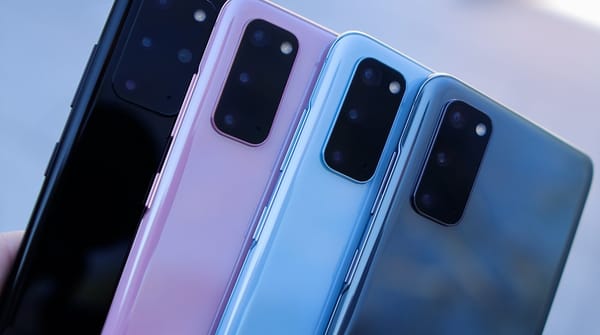
Camera Systems: Enterprise use cases increasingly rely on mobile imaging for documentation, quality control, and field assessments. Refurbished flagships incorporate sophisticated multi-lens arrays with optical image stabilization and computational photography capabilities.
Build Quality and Durability: Premium devices utilize aerospace-grade aluminum, ceramic shields, and IP68 water resistance as standard. This durability translates to longer service life and reduced total cost of ownership.
The 6G Timeline: Strategic Investment Windows
Understanding the 6G deployment timeline is essential for informed procurement decisions. Industry consensus indicates that 6G standardization through 3GPP will occur between 2028-2030, with initial commercial deployments beginning around 2030-2032.
This timeline creates a clear investment window for 5G devices. Organizations purchasing refurbished 5G flagships in 2026 can reasonably expect 4-5 years of optimal 5G performance before 6G becomes relevant.
Total Cost of Ownership: The Compelling Math
For enterprise deployments, the financial case for refurbished 5G flagships becomes even more compelling when analyzed through total cost of ownership (TCO) methodology.
• New Mid-Range 5G: $60,000 initial investment, 3-year lifespan, $36,000 net TCO
• Refurbished 5G Flagship: $45,000 initial investment, 4-year lifespan, $27,000 net TCO
The 25% TCO reduction does not account for additional benefits: superior productivity, reduced support tickets, and greater employee satisfaction.
Sustainability: The Circular Economy Imperative
Environmental considerations increasingly influence procurement decisions. The refurbished phone market directly supports circular economy principles. Each refurbished flagship device represents 80% reduction in carbon footprint compared to new manufacturing.
Conclusion: The Strategic Choice for 2026
As businesses navigate the technological transition from 5G to 6G, refurbished 5G flagship smartphones emerge as the unambiguous strategic choice. They deliver superior performance, proven reliability, and significant cost advantages while positioning organizations optimally for the connectivity landscape of the late 2020s.
Forward-thinking organizations that embrace refurbished 5G flagships today will enjoy enhanced productivity, reduced costs, and sustainable operations—positioning them strongly for the eventual 6G transition when the time is right.